




Clean air is invisible, but its impact is everywhere.
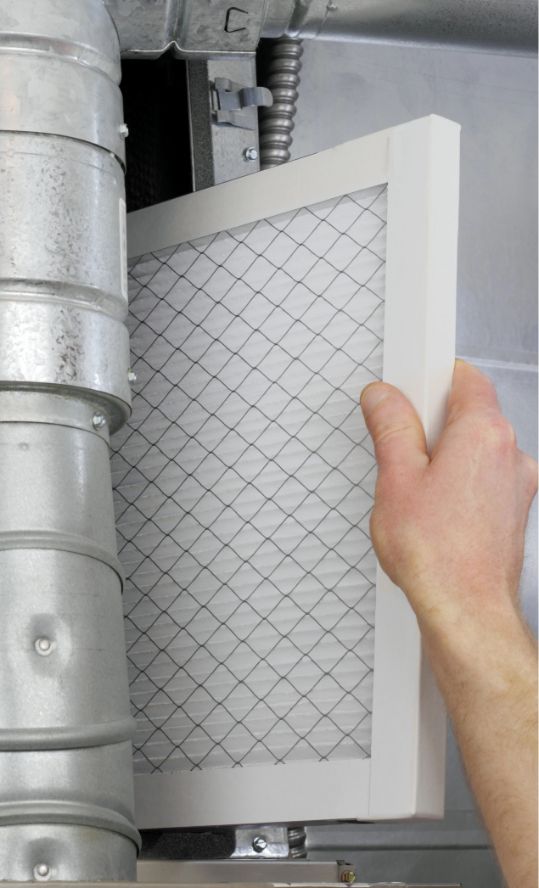
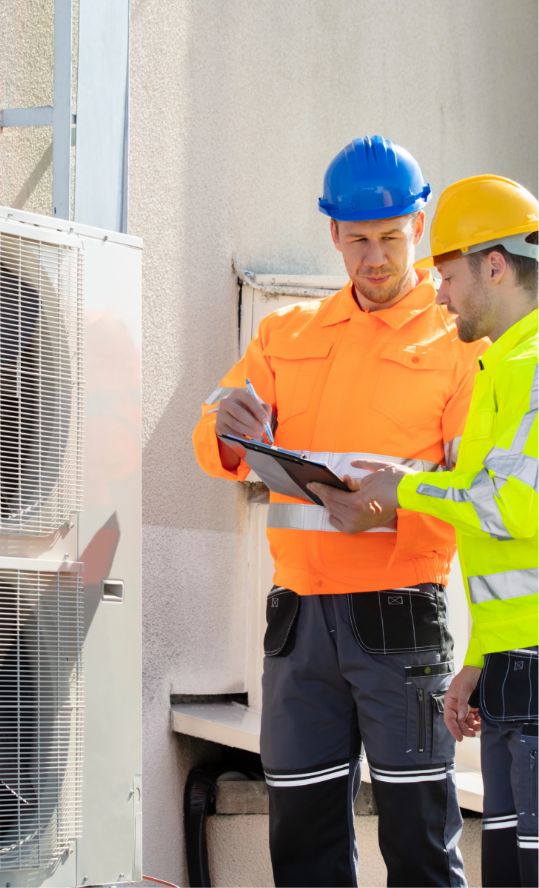
You see it in the hospital room where a newborn takes their first breath. In arenas filled with thousands of fans. In the lab, the classroom, and on the factory floor. Most people don’t think about clean air, but we do. Because when clean air matters, it really matters.


Who should consider indoor air quality testing?

Commercial Buildings
Office towers, retail centres, hotels, and conference facilities where occupant comfort depends on well-managed air.

Healthcare Facilities
Clinics, hospitals, labs, and compounding pharmacies where air quality is tied directly to patient safety and regulatory obligations.

Managed Properties
Property managers who need consistent, comparable air quality documentation across building portfolios.

Why should you test indoor air quality?

Understand Your Indoor Environment
Gain a clear snapshot of current indoor air quality conditions and establish a benchmark for future evaluations.

Identify Potential Concerns
Detect areas that may warrant further attention and receive practical recommendations to support a healthier indoor environment.

Support Occupant Confidence
Demonstrate your commitment to providing comfortable, well-ventilated spaces for tenants, employees, patients, and visitors.

Make More Informed Decisions
Receive documented results and expert interpretation to support facility management, maintenance planning, and building performance initiatives.
What do we test your indoor air quality for?
Carbon Dioxide (CO2)
Produced by people and combustion, elevated CO2 signals poor ventilation and can cause fatigue, reduced concentration, and discomfort.
Carbon Monoxide (CO)
A toxic, odourless, colourless gas from fuel-powered equipment that can cause headaches, nausea, and death at high levels. Risk rises in colder months.
Temperature
Uncomfortable temperatures affect comfort, productivity, sleep quality, and energy use. Stable, moderate conditions support occupant health and recovery.
Relative Humidity
Humidity affects comfort, respiratory health, and virus spread. Air that is too dry irritates eyes and airways; air that is too humid promotes mould growth.
Total Volatile Organic Compounds (TVOCs)
Gases released by paints, cleaners, adhesives, and air fresheners. Elevated levels can cause headaches, fatigue, nausea, and allergic reactions.
Particulate Matter (PM2.5, PM10)
Fine and coarse particles — dust, mould spores, smoke — that irritate the nose, throat, and lungs. Long-term exposure carries serious health risks.
Formaldehyde (CH20)
Released from paints, exhaust fumes, wildfire smoke, or unvented appliances in medical labs, exposure to formaldehyde can irritate the eyes, nose, and throat and trigger asthma symptoms.
Ozone (O3)
Measuring ozone helps to identify potential exposure from outdoor air or indoor sources such as air-cleaning devices and office equipment. Elevated ozone can irritate the eyes and respiratory system and may affect occupant comfort.
What you will receive with your Indoor Air Quality Testing
- On-site IAQ test conducted during normal occupancy with minimal disruption to your operations.
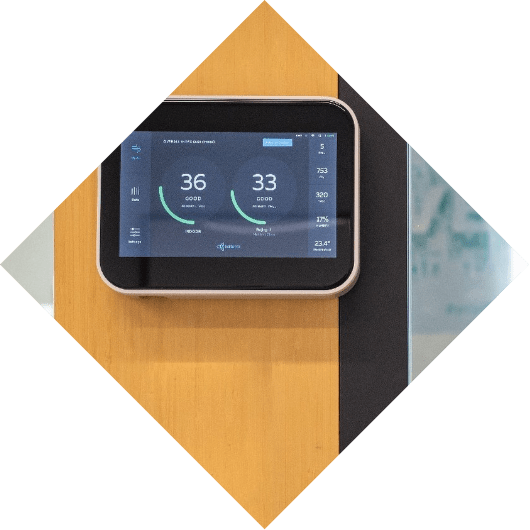
- A comprehensive report of your current indoor air quality using calibrated, direct reading instruments. Your custom report includes summarized readings, observations, findings, and recommended next steps (if applicable) to improve your IAQ.


Frequently Asked Questions
What is indoor air quality testing?
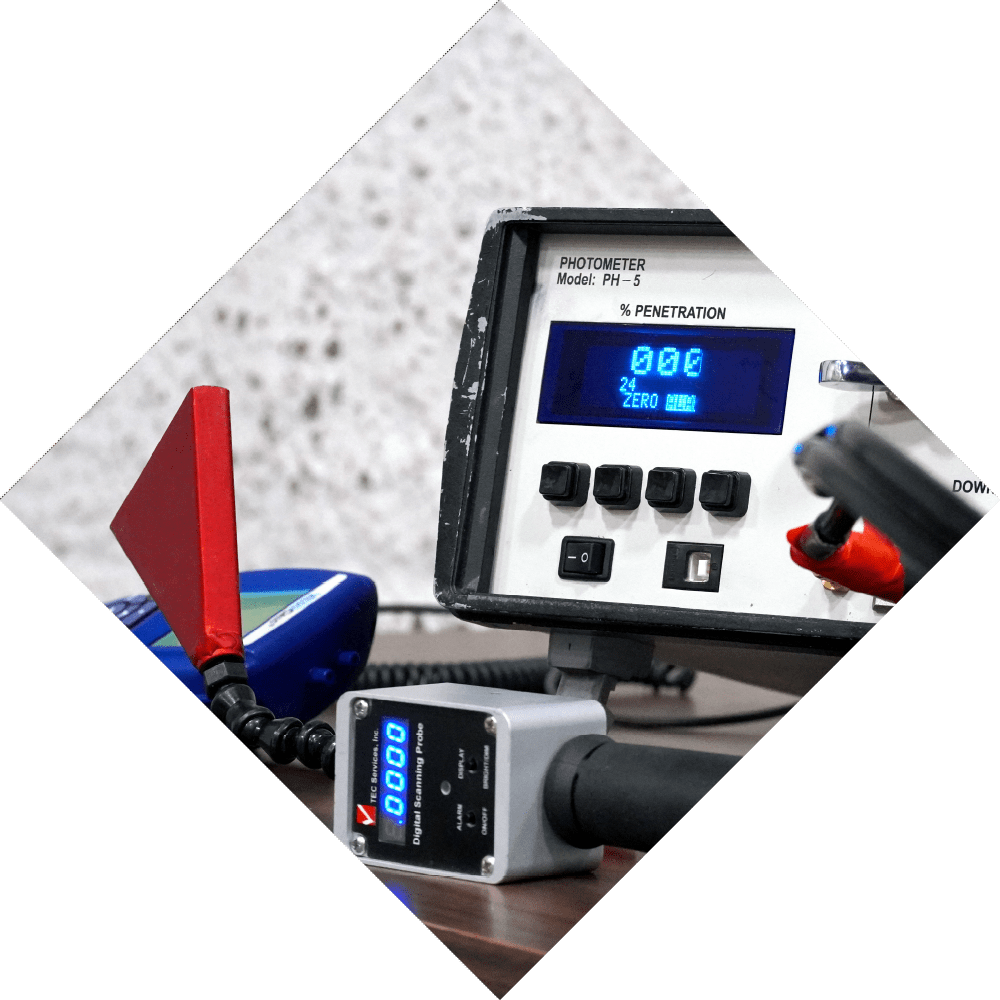
Our commercial indoor air quality (IAQ) test uses direct-reading instruments to measure select IAQ parameters at representative building locations during a defined testing period. The results provide a snapshot of conditions at the time of testing.
What indoor air quality parameters do you test?
The parameters are dependent upon the service selected but could include temperature, relative humidity, carbon dioxide (CO2), carbon monoxide (CO), particulate matter (PM) 2.5 and 10, total volatile organic compounds or TVOCs, and formaldehyde (CH20). Your proposal will clearly identify which parameters are included in your IAQ testing.
Is indoor air quality testing the same as continuous monitoring?
No, IAQ testing documents air quality conditions only during the testing period. Continuous monitoring collects measurements over longer, sustained periods of time to identify variations that do not occur during a scheduled, singular site visit.
Can indoor air quality testing support BOMA BEST certification requirements?
Our IAQ testing does not address every requirement for BOMA Best. However, the documented results may be used towards one or more requirements for a commercial property’s verification through BOMA Best. Final documentation acceptance, scoring, and certification decisions are made by BOMA. Please see BOMA Best guidelines for more information on Class A (including AAA), B, and C requirements.
Can indoor air quality testing help demonstrate compliance with building or contractual requirements?
Our IAQ testing documents scope, observations, measurements, and results at the time of testing. It can be used to support compliance, contractual obligations, and/or certification records. However, it does not automatically establish compliance with every regular, standard, agreement, or certification requirement. Please refer to your respective compliance guidelines for more information.
Can BGE test multiple buildings across my portfolio?
Yes, BGE can coordinate testing for multiple commercial properties, so you have standardized reports and documented annual reference to see if your efforts are achieving your goals.
How long does indoor air quality testing take, and when will I receive my final report?
Final reports are typically delivered within 5 business days following the completion of the on-site testing, subject to the final scope.
Where does BGE operate?
For over 55 years, BGE Indoor Air Quality Solutions has provided filtration products and services to some of Canada’s best-run buildings. We are a Canadian family-owned and operated business with a commitment to clean air that drives everything we do. We operate 9 branches coast-to-coast across Canada and are pleased to be providing air filtration and indoor air quality solutions to customers throughout British Columbia including Prince George, Vancouver, and more.
Is indoor air quality testing the same as spot testing?
Yes, they are the same indoor air quality test.
What other services does BGE offer?
BGE provides air filtration solutions, including HVAC filters, advanced odour and gas control media and filters, paint and finishing filtration, and specialty products designed to enhance air quality and system performance across various industries. In addition to IAQ testing, we provide a range of indoor air quality reporting and testing services. This includes investigative IAQ services to help identify and address specific indoor air quality concerns.
Book IAQ Testing
Interested in learning more about Indoor Air Quality Testing?? Reach out to us and we would be happy to connect with you.

Your Partners In Clean Air
Call 780-436-6960 today to speak with a BGE Clean Air Advisor.